


Why Some Video Games Still Challenge Modern AI: Researchers Investigate Why Some Video Games Still Challenge Modern AI, and the findings are opening a fascinating window into the limits of modern artificial intelligence. Over the past decade, AI systems have stunned the world by beating human champions in games once considered the ultimate test of strategy and intelligence. Yet when researchers place those same advanced algorithms inside certain video games, the machines sometimes struggle in surprising ways. If you’ve ever watched a kid pick up a new video game and figure things out in minutes—jumping around, experimenting, exploring—you might think computers would do the same thing even faster. But that’s not always the case. Despite massive computing power and sophisticated algorithms, some AI systems still require millions of attempts to learn strategies that humans understand almost instantly. This gap is exactly why researchers are studying video games more seriously than ever before.
Across universities and tech labs in the United States—including institutions like MIT, Stanford, and companies like Google DeepMind and OpenAI—scientists are using video games as testing grounds for the next generation of AI. These digital environments help researchers understand how machines learn, make decisions, and adapt to complex situations.
Table of Contents
Why Some Video Games Still Challenge Modern AI?
Researchers Investigate Why Some Video Games Still Challenge Modern AI, and their discoveries are revealing the true complexity of intelligence itself. While machines have conquered classic strategy games, modern video games expose weaknesses in exploration, planning, and adaptability. By studying these challenges, scientists are building smarter algorithms capable of navigating complex environments. The lessons learned from game AI could soon power breakthroughs in robotics, transportation, healthcare, and beyond. In many ways, the future of artificial intelligence may be shaped inside virtual worlds designed for play.
| Topic | Details |
|---|---|
| Main Topic | Why some video games remain difficult for modern AI |
| Key Technologies | Reinforcement Learning, Deep Learning, Neural Networks |
| Major Research Groups | Google DeepMind, OpenAI, MIT CSAIL, Stanford AI Lab |
| Key Statistic | Some AI agents require millions of gameplay attempts to discover strategies humans learn quickly |
| Real-World Applications | Robotics, autonomous vehicles, healthcare decision systems |
| Official Research Resource | https://deepmind.google |
| Career Fields | AI engineering, machine learning research, robotics development |
Why Video Games Are Becoming the Ultimate AI Test?
When most folks hear about AI beating humans at games, they immediately think machines have cracked the code of intelligence. But hold your horses—video games are a whole different rodeo compared to traditional board games.
Classic games like chess or Go have fixed rules, defined pieces, and limited possible moves. AI systems can analyze millions of potential outcomes and calculate optimal strategies.
Video games, however, introduce a level of complexity that more closely resembles real life.
For example, many modern games require players to:
- Navigate 3D environments
- Interpret visual cues
- Manage resources
- Solve puzzles
- Plan long-term strategies
- React in real time
Researchers at the MIT Computer Science and Artificial Intelligence Laboratory (CSAIL) explain that video games simulate dynamic environments filled with uncertainty, making them ideal laboratories for studying machine intelligence.
Unlike chess boards or card games, video games often include hidden information, unpredictable events, and evolving challenges. That means AI must constantly adapt rather than rely on pre-calculated solutions.
Why Some Video Games Still Challenge Modern AI: The Breakthroughs That Made AI Gaming Possible
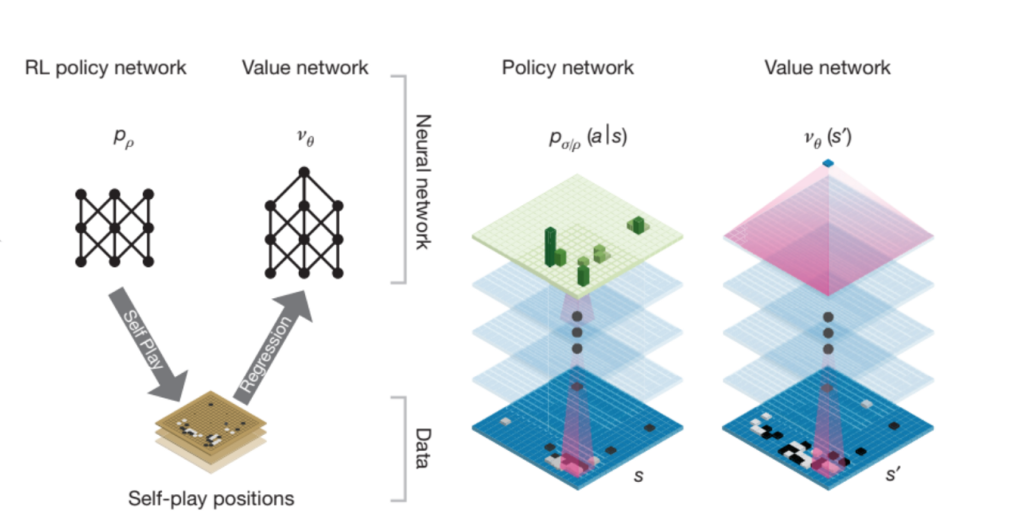
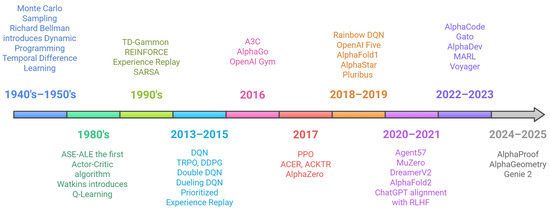
To understand why some games still stump AI, it helps to look at how far the technology has come.
Early Game AI Systems
In the early days of video games, computer-controlled characters followed simple rule-based scripts. These systems didn’t learn—they simply reacted to player actions based on predefined patterns.
For instance, enemies in classic arcade games often followed the same paths every time. Once players memorized those patterns, they could easily defeat them.
The Rise of Machine Learning
Everything changed when researchers began applying machine learning techniques to games.
One of the most important breakthroughs was deep reinforcement learning. This method allows AI to learn through trial and error.
The process works like this:
- The AI plays a game.
- It receives rewards for good actions.
- It adjusts its strategy based on results.
- Over time, it improves performance.
A famous example came in 2016 when AlphaGo, developed by Google DeepMind, defeated world champion Lee Sedol in the board game Go.
That victory shocked the world because Go had long been considered too complex for computers to master.
But here’s the interesting twist—many modern video games remain far harder for AI to handle than Go.
The Exploration Problem: Why AI Gets Stuck
One major reason some games challenge AI is known as the exploration problem.
Humans naturally explore when they encounter something new. Kids especially are great at experimenting—jumping on platforms, opening doors, or testing random actions just to see what happens.
AI systems, however, often prefer safe strategies that provide immediate rewards.
Imagine a game where a player must ignore small rewards early on in order to unlock a bigger prize later.
Humans can reason about that situation.
AI systems often cannot.
According to research published on arXiv.org, some reinforcement learning agents require millions of gameplay attempts before discovering solutions that human players find quickly.
This exploration problem remains one of the biggest barriers in modern AI development.
Why Some Video Games Still Challenge Modern AI: Delayed Rewards and Long-Term Planning
Another tricky issue for AI is delayed rewards.
Many games don’t reward players immediately. Instead, they require patience and long-term planning.
For example, survival games often require players to gather resources, build tools, and prepare for future challenges.
A human player understands that collecting wood now might help build shelter later.
An AI system, however, may struggle to connect early actions with rewards that appear much later.
Researchers refer to this challenge as the long-horizon planning problem.
Developing AI capable of planning far into the future remains one of the biggest goals in artificial intelligence research.
Visual Complexity and Perception Challenges
Video games also challenge AI because of their visual complexity.
Humans process visual information using powerful biological systems developed over millions of years of evolution. We can quickly recognize objects, patterns, and movement.
AI must rely on computer vision algorithms to interpret visual data.
This process involves converting images into numerical data that neural networks can analyze.
Even small changes in lighting, perspective, or background details can confuse AI systems.
For example, research has shown that adding small visual distortions to images can cause AI systems to misidentify objects entirely.
That’s a major problem for AI systems trying to navigate complex game worlds.
The Multi-Skill Challenge
Another reason some games remain difficult for AI is that they require multiple skills at once.
Human players combine many cognitive abilities simultaneously:
- Strategic thinking
- Navigation
- Reflexes
- Pattern recognition
- Decision making
- Risk assessment
Most AI systems today specialize in narrow tasks.
An AI trained for navigation might struggle with strategy.
An AI designed for planning might struggle with real-time reactions.
When all these abilities must work together—as they do in modern games—AI systems often fall short.
Real Games That Still Confuse Advanced AI
Several well-known games have become famous within the AI research community for their difficulty.
Montezuma’s Revenge
This Atari game is legendary among AI researchers.
The game provides very few rewards early on, forcing players to explore carefully before making progress.
AI agents frequently wander around the environment without discovering the correct path forward.
This makes it an excellent benchmark for studying exploration challenges.
Research from OpenAI has frequently referenced Montezuma’s Revenge as a major obstacle for reinforcement learning systems.
Minecraft
Another favorite research environment is Minecraft, the popular sandbox game.
In Minecraft, players must:
- Explore vast environments
- Gather resources
- Craft tools
- Build structures
- Defend against enemies
The open-ended nature of the game makes it incredibly challenging for AI.
Researchers use Minecraft to study how machines can learn complex tasks in dynamic environments.
Microsoft’s Project Malmo provides tools specifically designed for AI research within Minecraft.
Real-Time Strategy Games
Games like StarCraft II have also become important research platforms.
These games require players to manage economies, control armies, and respond to unpredictable opponents.
In 2019, DeepMind developed AlphaStar, an AI system capable of defeating professional StarCraft players.
However, even AlphaStar required massive computing power and extensive training data.
How Researchers Are Improving AI Through Games?
Despite the challenges, researchers are making steady progress.
Several new techniques are helping AI systems learn more effectively.
Curiosity-Based Learning
Scientists are designing algorithms that reward AI for exploring unfamiliar areas.
Instead of chasing only obvious rewards, the AI receives points simply for discovering new experiences.
This approach encourages more human-like curiosity.
Memory Systems
Some modern AI systems now include memory components that store past experiences.
This allows machines to recall previous situations and apply learned knowledge later.
These memory-based architectures help AI understand long-term relationships between actions and outcomes.
Transfer Learning
Another promising technique is transfer learning.
Transfer learning allows AI to apply knowledge learned in one environment to another.
For example:
- Learning navigation in one game
- Applying that knowledge in a different environment
This approach may eventually allow AI systems to learn much faster.
Why Some Video Games Still Challenge Modern AI Research Matters in the Real World?
You might wonder why researchers spend so much time teaching computers to play games.
The truth is video games provide safe testing environments for technologies that could transform everyday life.
Robotics
Robots operating in real-world environments face many of the same challenges as AI in games.
They must navigate obstacles, make decisions, and adapt to unexpected changes.
Autonomous Vehicles
Self-driving cars must process visual data, predict human behavior, and make quick decisions.
Game-based AI research helps develop algorithms capable of handling these complex tasks.
The U.S. National Highway Traffic Safety Administration (NHTSA) continues to study these technologies.
Healthcare AI
Medical AI systems must analyze large amounts of data and recommend treatment plans.
Understanding long-term outcomes and uncertain environments is crucial.
Lessons learned from gaming AI may help improve these systems.
Career Opportunities in AI and Game Research
The growing importance of AI research has created many exciting career paths.
Some of the fastest-growing roles include:
- Machine Learning Engineer
- AI Research Scientist
- Robotics Engineer
- Data Scientist
- Game AI Developer
According to the U.S. Bureau of Labor Statistics, employment in AI-related fields is expected to grow rapidly over the next decade.
Students interested in these careers often study:
- Computer science
- Mathematics
- Data science
- Artificial intelligence