

Hidden Roman Fortlet Unearthed: Hidden Roman Fortlet Unearthed Beneath Homes in Scotland is a discovery that has captured the attention of archaeologists, historians, and curious homeowners alike. Beneath quiet residential gardens in Bearsden, a suburb near Glasgow, Scotland, archaeologists uncovered the remains of a previously unknown Roman military outpost. What looked like ordinary backyard lawns turned out to be the resting place of a nearly 2,000-year-old Roman frontier structure connected to the powerful Roman Empire. For many Americans reading about this discovery, it may feel like something straight out of a movie. Imagine mowing your lawn one weekend and learning that ancient Roman soldiers once stood guard on the very same patch of land. But discoveries like this aren’t as rare as you might think. Across Europe, modern towns are often built over layers of ancient civilizations. This particular fortlet likely formed part of the defensive system tied to the famous Antonine Wall, which marked Rome’s northernmost frontier during the reign of Antoninus Pius.
The significance of this discovery goes beyond just a cool archaeological find. It gives researchers new insights into how Roman military forces monitored distant territories, how they organized small frontier posts, and how the empire attempted to control regions far from Rome itself. For professionals studying ancient warfare, logistics, and frontier systems, this discovery adds another important piece to the puzzle of Roman Britain.
Table of Contents
Hidden Roman Fortlet Unearthed
| Topic | Details |
|---|---|
| Discovery Location | Residential gardens in Bearsden, Scotland |
| Historical Period | Approximately AD 127–247 |
| Frontier System | Part of the Antonine Wall defense network |
| Structure Components | Defensive ditch, turf rampart, wooden fortification |
| Estimated Soldiers | Approximately 20–40 Roman troops |
| Archaeological Importance | Reveals previously undocumented Roman frontier monitoring system |
| Heritage Authority | Historic Environment Scotland |
| Official Resource | https://www.historicenvironment.scot |
The Roman Empire’s Reach into Britain
To understand why this discovery matters, we need to look at how far the Roman Empire stretched during its peak. At its height, the Roman Empire controlled territories across Europe, North Africa, and the Middle East. Britain became part of the empire after Roman forces invaded the island in AD 43 under Emperor Claudius.
The Romans remained in Britain for nearly four centuries, building roads, cities, forts, and defensive walls. These structures helped them maintain control over the territory while protecting Roman settlements from resistance.
One of the biggest challenges Roman commanders faced in Britain was defending the empire’s northern border, where tribes beyond Roman control frequently resisted Roman authority.
To solve this problem, the Romans built several frontier defenses, the most famous being Hadrian’s Wall and later the Antonine Wall.
Hidden Roman Fortlet Unearthed: The Antonine Wall and Rome’s Northern Frontier
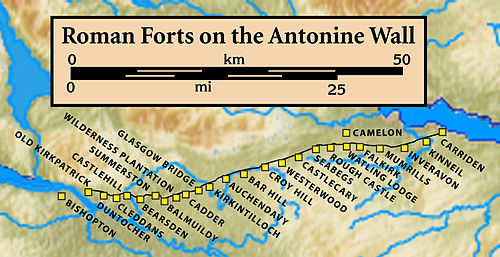
The Antonine Wall was constructed around AD 142, roughly two decades after Hadrian’s Wall. While Hadrian’s Wall was built primarily from stone, the Antonine Wall used a different design strategy.
The structure consisted of:
- A turf rampart built from layers of earth and grass
- A deep defensive ditch
- A military road running along the wall
- A network of forts and small fortlets
The wall stretched about 37 miles across central Scotland, connecting the Firth of Forth in the east to the Firth of Clyde in the west.
Today, the Antonine Wall is recognized as a UNESCO World Heritage Site, highlighting its global historical importance.
Although the Romans held this frontier for only about 20 years, the wall played a critical role in demonstrating Roman engineering and military strategy.
What Makes the Hidden Roman Fortlet Unearthed Discovery Special?
The newly discovered Roman fortlet beneath homes in Scotland is particularly significant because historians did not previously know it existed.
For decades, archaeologists believed the Antonine Wall system was well mapped. Major forts had already been identified along the frontier, including large military bases capable of housing hundreds of soldiers.
However, smaller fortlets and observation posts were harder to detect. Many were built using wood and turf, materials that degrade over time.
The discovery in Bearsden suggests that Roman military infrastructure may have been more extensive than historians realized.
Key Features Discovered During Excavation
Archaeologists working on the site identified several structural components that confirmed the presence of a Roman military outpost.
Defensive ditch
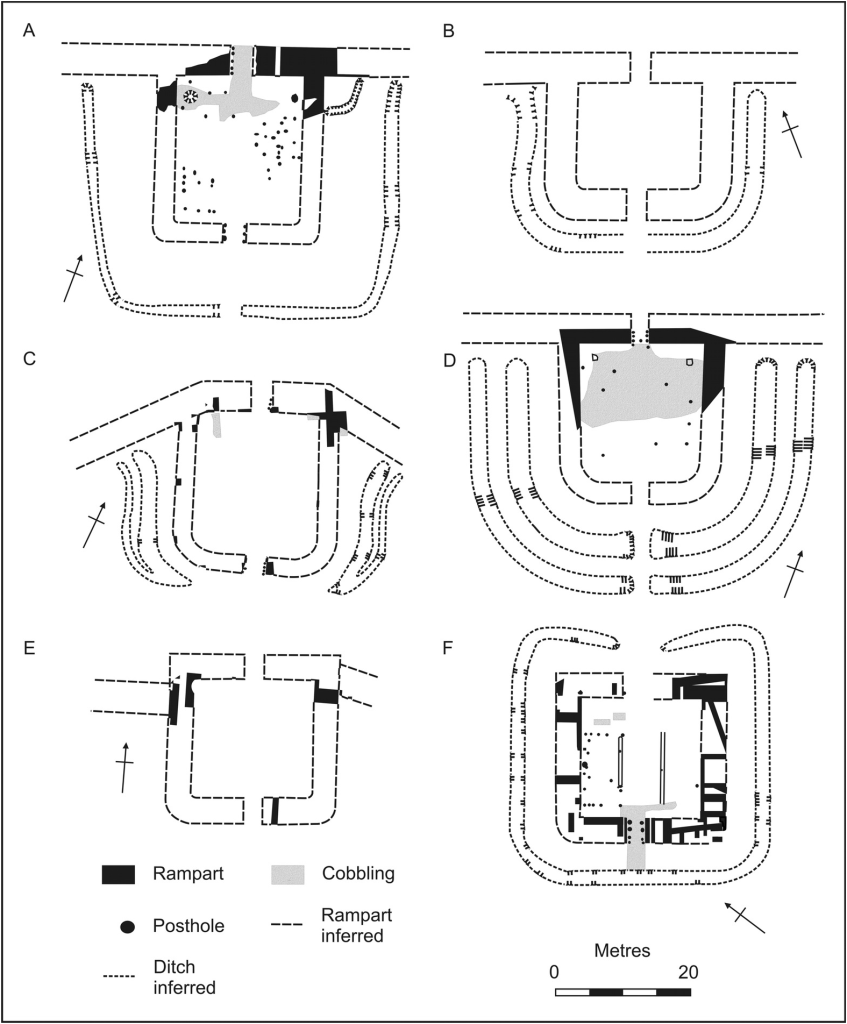
One of the first clues was a large ditch surrounding the fortlet area. Roman engineers frequently used ditches as a defensive measure to slow attackers and create obstacles around military installations.
These ditches often measured several meters wide and could be surprisingly deep.
Turf rampart
Behind the ditch was evidence of a turf rampart, a defensive wall built from compacted layers of soil and grass. Although turf walls may sound simple, Roman engineers designed them with remarkable efficiency.
These ramparts could be built quickly and still provide effective defense.
Wooden structural remains
Excavators also uncovered waterlogged wooden fragments, which were preserved by the moist soil conditions. These fragments likely came from wooden palisades or internal structures within the fortlet.
The preservation of wood is particularly valuable for archaeologists because it allows scientists to perform radiocarbon dating, helping determine the exact age of the site.
Dating the Roman Fortlet
Using radiocarbon dating techniques, researchers estimated the fortlet was active between AD 127 and AD 247.
This timeline aligns with the broader Roman occupation of northern Britain and the construction of the Antonine Wall.
Radiocarbon dating works by measuring the decay of carbon isotopes in organic materials such as wood. According to the U.S. National Park Service, the technique is widely used to date archaeological finds up to 50,000 years old.
Daily Life for Roman Soldiers at Frontier Posts
Life for soldiers stationed at small frontier posts like this fortlet was very different from life in major Roman cities.
Most soldiers stationed along the frontier were part of auxiliary units, meaning they were recruited from various regions of the empire rather than from Rome itself.
Daily routines likely included:
- Guard duty along the frontier
- Maintaining fortifications
- Training exercises
- Patrol missions
- Communication with nearby forts
Soldiers stationed at these remote locations often had to endure harsh weather conditions, limited supplies, and long periods away from home.
However, frontier life also created opportunities for cultural exchange. Archaeologists have discovered evidence that Roman soldiers interacted with local communities through trade and social relationships.
Roman Military Communication Networks
The newly discovered fortlet likely served as a communication hub between larger forts along the Antonine Wall.
Roman frontier systems relied heavily on communication signals to alert neighboring forts about potential threats.
Some communication methods included:
- Signal fires
- Flag signaling
- Messenger riders
- Horn signals
Because many frontier forts were positioned within visible distance of each other, signal fires could transmit warnings across long distances quickly.
This system functioned somewhat like an ancient early-warning network.
Archaeological Technology Used in Discoveries Today
Modern archaeology relies on advanced technology to locate buried sites without damaging them.
Before excavation begins, archaeologists often use geophysical surveys to analyze the ground.
These methods include:
Ground-penetrating radar (GPR)
This technology sends radar pulses into the ground to detect buried structures.
Magnetometry
Magnetometers measure changes in the Earth’s magnetic field caused by buried objects.
Electrical resistance surveys
These tests measure how soil conducts electricity, which can reveal hidden walls or ditches.
Using these tools allows archaeologists to identify potential sites before digging.
Could More Roman Sites Be Hidden Beneath Modern Cities?
Experts believe the answer is almost certainly yes.
Across Europe, modern cities often sit directly above ancient settlements.
Examples include:
- London, built over Roman Londinium
- York, once the Roman fortress Eboracum
- Cologne, which began as a Roman colony
Construction projects frequently uncover ancient remains. In many cases, archaeologists must conduct rescue excavations before construction can continue.
These projects help preserve valuable historical information that might otherwise be lost.
Cultural Heritage and Preservation Efforts of Hidden Roman Fortlet Unearthed
Discoveries like the Bearsden fortlet also highlight the importance of protecting archaeological sites.
Organizations such as Historic Environment Scotland work to preserve important heritage locations while balancing the needs of modern communities.
Preservation efforts often involve:
- Documenting archaeological sites
- Conducting controlled excavations
- Protecting artifacts in museums
- Educating the public about historical heritage
These efforts ensure that discoveries contribute to our understanding of human history while still allowing communities to grow and develop.
Advice for Homeowners Who Discover Historical Artifacts
Although most homeowners will never uncover a Roman fort in their backyard, accidental discoveries do happen.
If you ever find something that appears to be an ancient artifact, experts recommend the following steps:
Stop digging immediately
Disturbing the area further could damage fragile artifacts.
Document the find
Take photographs and note the location where the object was discovered.
Contact local heritage authorities
In many countries, reporting archaeological finds is required by law.
Avoid cleaning or altering the artifact
Improper handling could destroy valuable information.
Experts will evaluate the find and determine whether further investigation is necessary.